Picture this: I was hosting a dinner party, trying to set the mood with some music. I reached for my old Bluetooth speaker, only to be met with crackling sound and inconsistent connectivity. Frustration bubbled up as my carefully curated playlist faded into background noise. That moment was a lightbulb—my trusty speaker just wasn’t cutting it anymore. Sound quality and reliable wireless performance matter more than ever. We all want an immersive audio experience without the clutter and hassle of wires. Today, I’ll guide you through the latest in top wireless speakers of 2025 that can elevate your home audio, making every moment at home sound like a concert.
Why Upgrading to Wireless Speakers Changes Everything
Many of us have been stuck with aging sound systems, thinking, “This is good enough.” But with technology advancing rapidly, my early mistake was sticking to old, bulky speakers that couldn’t keep up with my increasingly demanding listening habits. I underestimated how much better wireless technology could make my home environment—from seamless streaming to crisp clarity. An independent study highlights that high-quality wireless audio devices now deliver near-perfection in sound fidelity, making wired setups nearly obsolete for daily use. Here’s the reality: If you’re still using outdated gadgets, you’re missing out on a richer, more convenient audio experience. Whether you’re into casual listening, movie nights, or hosting friends, having reliable, powerful wireless speakers transforms your space into a personal concert hall. But I know what you’re thinking—are these new speakers really worth the hype? And how do I avoid wasting money on something that sounds great in the store but falls flat at home? That’s what we’ll explore next.
Choose the Right Wireless Speaker Type
Start with identifying your listening environment. If you want immersive sound in a living room, consider tower speakers like those discussed here. For smaller spaces or desk setups, bookshelf speakers or portable Bluetooth options work best. Think of this step as selecting the right building blocks: you wouldn’t try to sculpt a masterpiece with the wrong tools, so picking the appropriate speaker type ensures your audio goals are met efficiently.
Assess Your Connectivity Needs
Ensure your device supports the latest Bluetooth versions, ideally 5.0 or higher, for stability and range. In my experience, older Bluetooth versions often caused interruptions during critical moments, much like a weak Wi-Fi signal. To avoid this, verify your device compatibility and consider upgrading your source device if needed. For seamless operation, look into models that support aptX or LDAC codecs for higher quality streaming, akin to upgrading from standard to high-definition viewing. This preemptive check is crucial to prevent frustration and ensure a smooth listening experience.
Set Up Your Space Strategically
Place your speakers in optimal positions: for stereo, position bookshelf speakers at ear level and equidistant from your listening spot. Tower speakers should be placed away from corners to prevent bass muddiness. Use the rule of thirds to balance sound dispersion, much like positioning speakers in a concert hall for even acoustics. In my own setup, I experimented with different placements, which initially led to a cluttered look and uneven sound. After some adjustments—moving speakers a few inches, angling them slightly—I achieved a rich, balanced sound that filled the room. It’s worth investing time in placement for the best auditory outcome.
Calibrate for Clarity and Power
Once your speakers are positioned, use room calibration features if available, or manually adjust EQ settings to suit your space. For example, reducing bass frequencies can clear up a muddled sound, much like tuning a musical instrument. If your speakers lack calibration tools, consider using a simple microphone app to analyze sound output and fine-tune accordingly. This step is vital; it transforms generic sound into a personalized, pristine experience, bringing out every nuance in your music or movie soundtrack. Remember, a little tweak here can dramatically enhance clarity and punch.
Secure Your Connection and Power
Ensure your Wi-Fi or Bluetooth connections are stable—interference from other devices can cause dropouts, akin to interrupted phone calls. Keep your devices close enough for strong signal reception, and avoid placing routers or Wi-Fi extenders near your speakers. For powered speakers, use quality cables and surge protectors to prevent audio distortion or damage. I learned this lesson the hard way when a power surge briefly knocked out my speaker’s sound; since switching to a surge protector, my setup runs without hiccups. Stable power and connection are the backbone of a consistent, high-quality audio experience.
Support and Maintenance Matter
Regularly update your speaker firmware if applicable, and clean your units gently to maintain optimal performance. Using a soft cloth to remove dust from vents and connectors prevents overheating and static noise. Check the manufacturer’s website occasionally (like contact info) for software updates or troubleshooting tips. Maintaining your gear ensures it continues to deliver crystal-clear sound, much like tuning a musical instrument keeps it playing harmoniously for years. Staying proactive with maintenance safeguards your investment and ensures sustained audio excellence.
Even enthusiasts often fall prey to misconceptions about wireless and hi-fi audio setups. One prevalent myth is that all Bluetooth speakers deliver the same quality, but in reality, many affordable models sacrifice sound clarity for portability. Additionally, many believe that bookshelf and tower speakers are interchangeable, but the acoustic nuances and suitable environments differ significantly—basketball-sized tower speakers can produce deeper bass and more precise soundstage, especially in larger rooms, as highlighted in this guide. A common mistake is neglecting room acoustics; even the best speakers will underperform if placed poorly, which underscores the importance of strategic positioning and calibration. For audiophiles seeking true sound depth, a misconception is that high-quality digital sources alone guarantee pristine audio; however, the digital-to-analog conversion and amplifier quality play crucial roles, as discussed in this article. One sneaky pitfall is ignoring firmware updates on wireless speakers—a simple oversight that can lead to connectivity issues or missed enhancements. A study from Audioholics emphasizes that regular maintenance and configuration can outperform out-of-the-box setups. Now, a question for the savvy listener: How do advanced digital signal processing features like room correction impact your sound experience? It’s often overlooked but can refine sound staging and clarity significantly. Remember, even minor technical misunderstandings can lead to frustrating experiences or subpar performance. Always verify your gear’s capabilities and keep firmware current—your ears will thank you.
Have you ever fallen into this trap? Let me know in the comments.
How Do I Maintain My Wireless Speakers Over Time?
Proper maintenance is crucial to ensure your high-fidelity audio system performs at its best for years to come. Regularly cleaning your speakers with a soft microfiber cloth prevents dust buildup that can affect sound clarity and ventilation. For delicate components, use compressed air to remove debris from vents and ports without applying too much pressure. I personally recommend using a gentle electronic cleaner spray on connection points and control buttons—just ensure the product is suited for sensitive electronics, referencing specifications from trusted manufacturers. Firmware updates are another vital aspect; staying current via the manufacturer’s website or contact page (contact us) guarantees your device benefits from the latest performance improvements and security patches. Additionally, if your model supports room calibration, regularly recalibrating your system ensures optimal audio tailoring as your space’s acoustics evolve. By incorporating these routine steps, your setup remains resilient and delivers pristine sound quality.
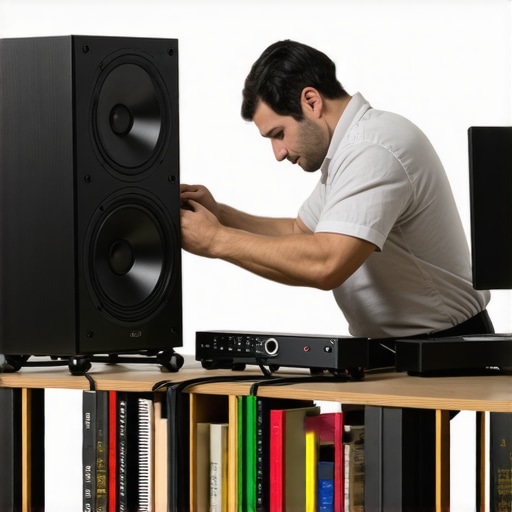
Imagine a technician inspecting and updating a premium bookshelf speaker, highlighting the importance of routine checks and firmware updates for sustained performance.
What Are the Best Tools for Maintaining Your Hi-Fi System?
Investing in quality tools pays dividends in preserving your system’s integrity. A microfiber cloth is essential for dusting delicate drivers and enclosures without scratching surfaces. For more stubborn grime, a soft brush with anti-static properties can dislodge accumulated particles in hard-to-reach areas, reminiscent of audiophile-grade cleaning kits recommended by industry experts. Compressed air cans, with variable pressure control, help clean internal ports and vents, minimizing overheating and static issues. To accurately analyze and optimize your room’s acoustics, consider software solutions like REW (Room EQ Wizard), which I personally use to measure frequency response and fine-tune my speaker placement for a balanced soundstage. Firmware management tools provided by manufacturers or third-party utilities can streamline updates, ensuring your firmware stays current—these are particularly valuable for complex wireless setups. Integrating these tools into your maintenance routine prevents minor issues from escalating, safeguarding your audio investment.
Looking Ahead: The Future of Speaker Maintenance
As technology advances, expect smarter, more self-sufficient systems capable of automated diagnostics and calibration. AI-driven apps may soon monitor component health in real-time, alerting users before a component fails and even guiding repairs remotely. The integration of IoT (Internet of Things) allows for seamless, remote maintenance and updates, reducing downtime and enhancing user experience. To stay ahead, I recommend beginning with reliable software like REW and keeping firmware regularly updated. Why not try setting up automatic room calibration routines using your existing tools? Experimenting now will prepare you for the next wave of intelligent audio solutions, ensuring your home sound system remains a source of pleasure, not frustration.
What I Wish I Knew About Wireless Sound Improvements
One of the most impactful lessons I learned was that not all wireless speakers are created equal; trusting marketing hype without firsthand experience can lead to disappointment. Also, room acoustics can secretly sabotage your setup—no matter how advanced your speakers are, placement and environment matter immensely. Lastly, ignoring firmware updates and maintenance can silently degrade performance over time, turning once-pristine sound into muddled noise. Embracing these insights transformed my approach and unlocked a truly immersive audio experience that I now cherish daily.
My Go-To Resources for Smart Home Audio Tuning
For me, this guide offers deep dives into mastering home audio clarity, which has helped me fine-tune my system. I also rely on the comprehensive wireless speaker overview for selecting equipment that matches my evolving needs. Lastly, the support team provides invaluable assistance for firmware and troubleshooting—keeping my system in peak condition.
Your Next Move Towards Superior Sound
Investing in quality wireless speakers and understanding the nuances of placement and maintenance can redefine your listening experience. Don’t settle for mediocrity when a little knowledge and care can bring concert-hall sound into your home. So why not start today? Explore the options, apply these lessons, and enjoy the rich, immersive audio you deserve. Let your music, movies, and moments fill your space with clarity and power—your ears will thank you for it.
What’s been your biggest challenge in upgrading your home audio setup? Share your story below—I’d love to hear from you!
,